

From the Indian Ocean to the Southern Ocean, deep-sea fisheries support jobs, livelihoods and economic opportunities.
A study by the Common Oceans Deep-sea Fisheries (DSF) Project has for the first time found that value chains of alfonsino and toothfish, two deep-water fish species, support livelihoods and economic opportunities, while contributing to the sustainability of fisheries in areas beyond national jurisdiction (ABNJ).
The DSF study, financed by the Global Environment Facility, focused on the socio-economic importance of alfonsino in the Indian Ocean and the Patagonian and Antarctic toothfish in the sub-Antarctic and Antarctic regions.
“Very little information is available about these small but high value fisheries,” said Eszter Hidas, Manager of the DSF Project.
Two alfonsino and eight toothfish operators provided data and information on the environmental, social and economic aspects of the value chain. Official global capture, landing, production and trade data reported by countries to FAO, and other sources, also complemented the data.
The findings have been compiled into a brochure, in collaboration with industry stakeholders, highlighting the cultural and socioeconomic importance of these value chains and the environmental practices that support their sustainability.
“Strengthening the socioeconomic understanding of these fisheries is essential to inform balanced management decisions,”
said Marcelo Vasconcellos, Fishery Resource Officer at FAO, and lead technical officer of the DSF Project.
“This preliminary study demonstrated the importance of industry commitment and international cooperation to support both sustainable resource use and minimize ecosystem impacts in the ABNJ.”
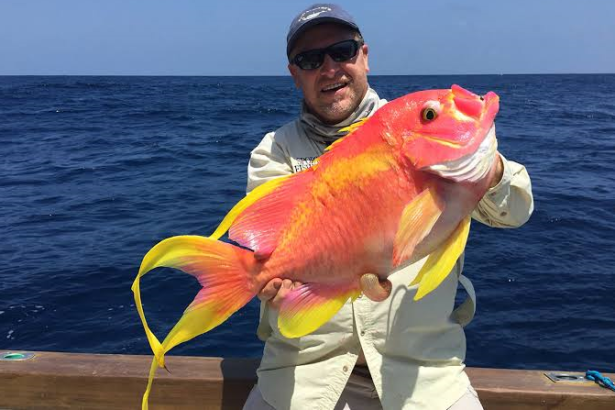
The alfonsino, a sea bream, is rooted in Japan’s culture and has been part of the country’s traditional cuisine for centuries. Known as Kinmedai in Japanese, the fish is highly prized for its sweet taste and firm texture. It is also associated with spiritual powers and served on special occasions.
While Japan is the primary market, alfonsino is also in demand in the US and China. The study confirmed that the alfonsino value chain generates high-value economic returns, driven by quality and niche demand.
Alfonsino fisheries support the livelihoods of highly specialized crew members and processing workers from diverse nationalities. Employment is formalized, with written contracts, training and clear remuneration structures.
“Even though the fishery takes place a long way from shore and in the high seas, the workers out there are just like any other primary industry,” said Charles Heaphy, President of the Southern Indian Ocean Deepsea Fishers Association (SIODFA).
Operators reported that in 2022, 3500 tonnes of landed alfonsino came from ABNJ in the Indian Ocean with an estimated value added across the value chain at USD 12 million.
The alfonsino fishery is managed by the South Indian Ocean Fisheries Agreement (SIOFA) and according to assessments in 2025, stocks are not overfished. To reduce ecosystem impacts, fishing vessels use midwater or pelagic trawls to minimize or eliminate contact with the ocean floor and apply move-on rules when indicators of vulnerable marine ecosystems (VMEs) are encountered.


Photo by Coalition of Legal Toothfish Operators (COLTO)
Toothfish is a premium, high-priced fish which is popular in the US and China. Global toothfish catches were estimated at an average of around 27000 tonnes from 2012 to 2022, with Patagonian toothfish being caught in the southern Indian, Pacific and Atlantic Oceans, and Antarctic toothfish caught around Antarctica.
The price of the fish generally ranges from USD 60 to over USD 100 per kilogram. Prices reflect its delicate, buttery texture and difficult deep-sea harvesting in the remote Southern Ocean.
The toothfish value chain generates high-value economic returns. For the estimated 4025 tonnes of landed toothfish coming from ABNJ in the Antarctic, the total value added across the value chain is estimated to be USD 70.4 million.
Behind this high-value fishery is a specialized workforce. Thirty-five toothfish vessels operate globally, employing 1600 full-time workers.
“Behind every toothfish landed is a skilled crew working in some of the world’s most remote and harshest waters, and a wider network of people whose livelihoods depend on a well-managed fishery,” said Rhys Arangio, executive officer for the Coalition of Legal Toothfish Operators (COLTO).
Toothfish fisheries in the ABNJ are managed by regional fisheries bodies – the Southern Indian Ocean Fisheries Agreement (SIOFA), the South East Atlantic Fisheries Organisation (SEAFO), the South Pacific Regional Fisheries Management Organisation (SPRFMO) and the Commission for the Conservation of Antarctic Marine Living Resources (CCAMLR).
According to the Coalition of Legal Toothfish Operators (COLTO), illegal, unreported and unregulated (IUU) catches of toothfish have drastically declined since the 1990s.
FAO’s Review of the State of World Marine Fishery Resources (2025) estimates that 92 percent of assessed toothfish stocks are now sustainably exploited and that around half are certified by the Marine Stewardship Council.