
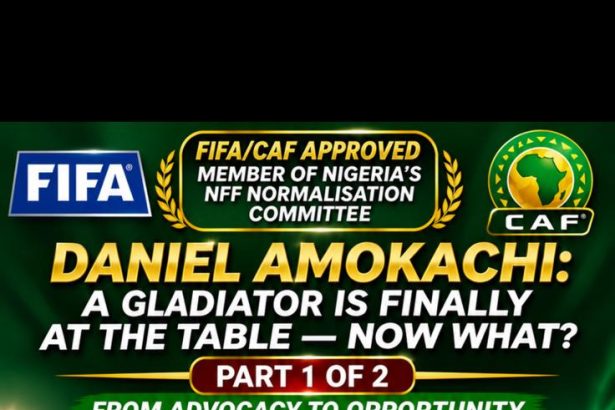
𝐏𝐀𝐑𝐓 𝟏 𝐎𝐅 𝟐 — 𝐅𝐑𝐎𝐌 𝐀𝐃𝐕𝐎𝐂𝐀𝐂𝐘 𝐓𝐎 𝐎𝐏𝐏𝐎𝐑𝐓𝐔𝐍𝐈𝐓𝐘
BY PAUL LUCKY OKOKU
For more than a year, I have consistently advocated for Nigerian footballers to have a meaningful seat at the table where decisions affecting their profession, welfare and future are made.
I have written repeatedly about player representation, questioned the limited influence of footballers within our governance structures and challenged the assumption that those who played the game should remain spectators while others determine its direction.
Now, something significant has happened.
On 𝐍𝐨𝐯𝐞𝐦𝐛𝐞𝐫 𝟏𝟖, 𝟐𝟎𝟐𝟔, FIFA communicated the composition of a five-member Normalisation Committee for the Nigeria Football Federation following consultation with CAF. The NFF publicly confirmed the appointments on 𝐍𝐨𝐯𝐞𝐦𝐛𝐞𝐫 𝟏𝟗.
Among those appointed is 𝐃𝐚𝐧𝐢𝐞𝐥 𝐀𝐦𝐨𝐤𝐚𝐜𝐡𝐢, a distinguished former Nigerian international, Olympic gold medalist, two-time FIFA World Cup participant and former Super Eagles coach.
The committee is chaired by Barrister Sampson Ebomhe. Its other members are Dr. Joe Abah, Godwin Enakhena and Amina Yerima.
Amokachi’s inclusion brings an experienced footballer’s perspective into a committee entrusted with restructuring Nigerian football administration.
I congratulate him sincerely and wish his four colleagues success.
But congratulations are only the beginning.
𝐓𝐡𝐞 𝐦𝐨𝐬𝐭 𝐢𝐦𝐩𝐨𝐫𝐭𝐚𝐧𝐭 𝐪𝐮𝐞𝐬𝐭𝐢𝐨𝐧 𝐢𝐬 𝐧𝐨𝐭 𝐰𝐡𝐞𝐭𝐡𝐞𝐫 𝐚 𝐟𝐨𝐫𝐦𝐞𝐫 𝐟𝐨𝐨𝐭𝐛𝐚𝐥𝐥𝐞𝐫 𝐡𝐚𝐬 𝐟𝐢𝐧𝐚𝐥𝐥𝐲 𝐛𝐞𝐞𝐧 𝐚𝐩𝐩𝐨𝐢𝐧𝐭𝐞𝐝. 𝐈𝐭 𝐢𝐬 𝐰𝐡𝐚𝐭 𝐡𝐞 𝐜𝐚𝐧 𝐡𝐞𝐥𝐩 𝐚𝐜𝐡𝐢𝐞𝐯𝐞 𝐟𝐨𝐫 𝐭𝐡𝐨𝐬𝐞 𝐰𝐡𝐨 𝐩𝐥𝐚𝐲 𝐭𝐡𝐞 𝐠𝐚𝐦𝐞.
𝐓𝐇𝐄 𝐆𝐋𝐀𝐃𝐈𝐀𝐓𝐎𝐑𝐒 𝐀𝐑𝐄 𝐓𝐇𝐄 𝐑𝐄𝐀𝐒𝐎𝐍 𝐓𝐇𝐄 𝐀𝐑𝐄𝐍𝐀 𝐄𝐗𝐈𝐒𝐓𝐒
Football administrators do not create the spectacle on the field.
Footballers do.
They train, compete, suffer injuries, entertain supporters and represent their clubs and countries. Their contributions generate the public interest, sponsorships, broadcasting value and commercial activity that sustain football institutions.
Yet those whose livelihoods depend directly on the game have not always enjoyed influence proportionate to their contributions.
This has been the foundation of my advocacy.
𝐓𝐡𝐞 𝐩𝐥𝐚𝐲𝐞𝐫 𝐦𝐮𝐬𝐭 𝐡𝐚𝐯𝐞 𝐚 𝐬𝐞𝐚𝐭 𝐚𝐭 𝐭𝐡𝐞 𝐭𝐚𝐛𝐥𝐞 — 𝐛𝐮𝐭 𝐭𝐡𝐞 𝐩𝐥𝐚𝐲𝐞𝐫 𝐦𝐮𝐬𝐭 𝐚𝐥𝐬𝐨 𝐡𝐚𝐯𝐞 𝐚 𝐯𝐨𝐢𝐜𝐞 𝐢𝐧 𝐝𝐞𝐜𝐢𝐝𝐢𝐧𝐠 𝐰𝐡𝐨 𝐨𝐜𝐜𝐮𝐩𝐢𝐞𝐬 𝐭𝐡𝐚𝐭 𝐬𝐞𝐚𝐭.
Nobody owns the table.
Not the NFF president. Not the State Football Association chairmen. Not the former internationals. Not the professional clubs.
The table belongs to Nigerian football, and its governance must reflect the legitimate interests of those who sustain the game.
There is, however, an important distinction.
Amokachi was appointed by FIFA following consultation with CAF. He was not elected by Nigeria’s active footballers as their representative.
His appointment creates an opportunity for a former international to influence reform. It does not automatically establish a democratic mandate from professional players.
That distinction matters because our objective must be lasting representation, not simply another prestigious appointment.
𝐃𝐀𝐍𝐈𝐄𝐋, 𝐂𝐎𝐍𝐒𝐔𝐋𝐓 𝐘𝐎𝐔𝐑 𝐏𝐑𝐄𝐃𝐄𝐂𝐄𝐒𝐒𝐎𝐑𝐒, 𝐂𝐎𝐍𝐓𝐄𝐌𝐏𝐎𝐑𝐀𝐑𝐈𝐄𝐒 𝐀𝐍𝐃 𝐒𝐔𝐂𝐂𝐄𝐒𝐒𝐎𝐑𝐒
Daniel, I speak to you as a fellow former Nigerian international who understands what it means to represent our country.
You played professionally at the highest level, represented Nigeria at major tournaments and later worked within football as a coach.
Those experiences are valuable.
But no individual, however accomplished, possesses all the knowledge necessary to understand the interests of generations of Nigerian footballers.
My advice is simple:
𝐂𝐨𝐧𝐬𝐮𝐥𝐭 𝐲𝐨𝐮𝐫 𝐩𝐫𝐞𝐝𝐞𝐜𝐞𝐬𝐬𝐨𝐫𝐬, 𝐲𝐨𝐮𝐫 𝐜𝐨𝐧𝐭𝐞𝐦𝐩𝐨𝐫𝐚𝐫𝐢𝐞𝐬 𝐚𝐧𝐝 𝐲𝐨𝐮𝐫 𝐬𝐮𝐜𝐜𝐞𝐬𝐬𝐨𝐫𝐬.
Speak with Segun Odegbami, Felix Owolabi and Adokiye Amiesimaka. Engage former internationals who played before you, those who shared your generation and those who came afterward.
Some former footballers have established businesses, managed organisations, served on corporate boards, practised law, developed academies or worked in international football administration.
Their experience can strengthen the reform process.
Consult qualified professionals, coaches, club administrators and individuals who understand institutional governance.
Invite written submissions, organise focused discussions and seek advice from people who have successfully managed organisations.
Do not listen only to those who agree with you. Those who have criticised the existing system may understand its weaknesses particularly well.
This is not about appointing every former international to another committee.
𝐓𝐡𝐢𝐬 𝐢𝐬 𝐧𝐨𝐭 𝐚 𝐩𝐨𝐩𝐮𝐥𝐚𝐫𝐢𝐭𝐲 𝐜𝐨𝐧𝐭𝐞𝐬𝐭. 𝐈𝐭 𝐢𝐬 𝐚 𝐫𝐞𝐬𝐩𝐨𝐧𝐬𝐢𝐛𝐢𝐥𝐢𝐭𝐲 𝐭𝐨 𝐡𝐞𝐥𝐩 𝐜𝐫𝐞𝐚𝐭𝐞 𝐚 𝐛𝐞𝐭𝐭𝐞𝐫 𝐬𝐲𝐬𝐭𝐞𝐦.
𝐀𝐂𝐓𝐈𝐕𝐄 𝐏𝐋𝐀𝐘𝐄𝐑𝐒: 𝐓𝐇𝐄𝐈𝐑 𝐂𝐎𝐍𝐂𝐄𝐑𝐍𝐒 𝐌𝐔𝐒𝐓 𝐃𝐑𝐈𝐕𝐄 𝐓𝐇𝐄 𝐂𝐎𝐍𝐒𝐔𝐋𝐓𝐀𝐓𝐈𝐎𝐍
While former internationals can contribute experience, today’s footballers must speak for themselves.
They know whether their salaries are paid on time, how their contracts are administered and what happens when disputes arise.
They understand the difficulties involving injuries, medical treatment, insurance, accommodation, travel arrangements, bonuses and allowances.
Women’s footballers may experience additional challenges concerning maternity protections, facilities, medical support and professional opportunities.
Domestic league players may confront circumstances different from those playing abroad. Younger footballers face concerns involving education, safeguarding, age verification and potentially exploitative contracts.
Daniel should hear directly from active male and female professionals, national-team players, lower-division footballers, youth players and credible player associations.
Retired players who have experienced contractual disputes, career-ending injuries or difficult transitions into life after football should also contribute.
The committee should document their concerns and identify which protections are missing, which regulations are poorly enforced and what solutions players themselves propose.
Most importantly, footballers must be able to express legitimate concerns without depending on the personal intervention of an influential former player.
The experiences of today’s professionals should shape tomorrow’s governance arrangements.
𝐁𝐄𝐘𝐎𝐍𝐃 𝐓𝐇𝐄 𝐏𝐈𝐓𝐂𝐇: 𝐀𝐌𝐎𝐊𝐀𝐂𝐇𝐈’𝐒 𝐄𝐗𝐏𝐄𝐑𝐈𝐄𝐍𝐂𝐄 𝐈𝐍 𝐏𝐑𝐄𝐒𝐈𝐃𝐄𝐍𝐓𝐈𝐀𝐋 𝐒𝐏𝐎𝐑𝐓𝐒 𝐀𝐃𝐌𝐈𝐍𝐈𝐒𝐓𝐑𝐀𝐓𝐈𝐎𝐍
Beyond his distinguished career as a footballer and coach, 𝐃𝐚𝐧𝐢𝐞𝐥 𝐀𝐦𝐨𝐤𝐚𝐜𝐡𝐢 has also served Nigeria in presidential sports-related appointments.
On 𝐅𝐞𝐛𝐫𝐮𝐚𝐫𝐲 𝟒, 𝟐𝟎𝟐𝟎, former President 𝐌𝐮𝐡𝐚𝐦𝐦𝐚𝐝𝐮 𝐁𝐮𝐡𝐚𝐫𝐢 appointed him 𝐍𝐢𝐠𝐞𝐫𝐢𝐚’𝐬 𝐅𝐨𝐨𝐭𝐛𝐚𝐥𝐥 𝐀𝐦𝐛𝐚𝐬𝐬𝐚𝐝𝐨𝐫, a role involving football development, talent identification and the mentorship of young athletes.
Later that year, he was appointed 𝐒𝐩𝐞𝐜𝐢𝐚𝐥 𝐀𝐬𝐬𝐢𝐬𝐭𝐚𝐧𝐭 𝐨𝐧 𝐒𝐩𝐨𝐫𝐭𝐬 𝐭𝐨 𝐏𝐫𝐞𝐬𝐢𝐝𝐞𝐧𝐭 𝐁𝐮𝐡𝐚𝐫𝐢, effective 𝐀𝐮𝐠𝐮𝐬𝐭 𝟏𝟏, 𝟐𝟎𝟐𝟎, with responsibility for advising the president on sports matters.
These appointments introduced another dimension to Amokachi’s professional experience, exposing him to the relationship between 𝐠𝐨𝐯𝐞𝐫𝐧𝐦𝐞𝐧𝐭, 𝐬𝐩𝐨𝐫𝐭𝐬 𝐩𝐨𝐥𝐢𝐜𝐲 and 𝐧𝐚𝐭𝐢𝐨𝐧𝐚𝐥 𝐟𝐨𝐨𝐭𝐛𝐚𝐥𝐥 𝐝𝐞𝐯𝐞𝐥𝐨𝐩𝐦𝐞𝐧𝐭.
Although the publicly available information provides more detail about his appointments than their measurable achievements, his experience across these responsibilities remains relevant.
He has participated in football from several perspectives: as an international player, professional club footballer, national-team coach, football ambassador and presidential sports adviser.
His latest appointment to the 𝐅𝐈𝐅𝐀-𝐚𝐩𝐩𝐨𝐢𝐧𝐭𝐞𝐝 𝐍𝐅𝐅 𝐍𝐨𝐫𝐦𝐚𝐥𝐢𝐬𝐚𝐭𝐢𝐨𝐧 𝐂𝐨𝐦𝐦𝐢𝐭𝐭𝐞𝐞 therefore brings those different experiences together at a critical moment for Nigerian football.
𝐓𝐡𝐞 𝐨𝐩𝐩𝐨𝐫𝐭𝐮𝐧𝐢𝐭𝐲 𝐧𝐨𝐰 𝐢𝐬 𝐭𝐨 𝐭𝐫𝐚𝐧𝐬𝐥𝐚𝐭𝐞 𝐚 𝐥𝐢𝐟𝐞𝐭𝐢𝐦𝐞 𝐨𝐟 𝐟𝐨𝐨𝐭𝐛𝐚𝐥𝐥 𝐞𝐱𝐩𝐞𝐫𝐢𝐞𝐧𝐜𝐞 𝐢𝐧𝐭𝐨 𝐚 𝐜𝐨𝐧𝐭𝐫𝐢𝐛𝐮𝐭𝐢𝐨𝐧 𝐭𝐨 𝐥𝐚𝐬𝐭𝐢𝐧𝐠 𝐢𝐧𝐬𝐭𝐢𝐭𝐮𝐭𝐢𝐨𝐧𝐚𝐥 𝐫𝐞𝐟𝐨𝐫𝐦.
𝐃𝐀𝐍𝐈𝐄𝐋 𝐀𝐌𝐎𝐊𝐀𝐂𝐇𝐈, 𝐒𝐄𝐆𝐔𝐍 𝐎𝐃𝐄𝐆𝐁𝐀𝐌𝐈 𝐀𝐍𝐃 𝐓𝐇𝐄 𝐐𝐔𝐄𝐒𝐓𝐈𝐎𝐍 𝐎𝐅 𝐑𝐄𝐏𝐑𝐄𝐒𝐄𝐍𝐓𝐀𝐓𝐈𝐎𝐍
Before proceeding, I wish to express my heartfelt concern for 𝐂𝐡𝐢𝐞𝐟 𝐒𝐞𝐠𝐮𝐧 𝐎𝐝𝐞𝐠𝐛𝐚𝐦𝐢 following the disturbing machete attack at his Abeokuta residence on 𝐅𝐫𝐢𝐝𝐚𝐲, 𝐍𝐨𝐯𝐞𝐦𝐛𝐞𝐫 𝟐𝟎, 𝟐𝟎𝟐𝟔. I am deeply grateful that he survived this frightening ordeal and has been discharged from hospital. I wish him a 𝐬𝐩𝐞𝐞𝐝𝐲 𝐚𝐧𝐝 𝐜𝐨𝐦𝐩𝐥𝐞𝐭𝐞 𝐫𝐞𝐜𝐨𝐯𝐞𝐫𝐲.
The inclusion of 𝐃𝐚𝐧𝐢𝐞𝐥 𝐀𝐦𝐨𝐤𝐚𝐜𝐡𝐢 in FIFA’s five-member NFF Normalisation Committee naturally invites discussion about other former Nigerian internationals who have consistently advocated football reforms.
One prominent name is 𝐒𝐞𝐠𝐮𝐧 𝐎𝐝𝐞𝐠𝐛𝐚𝐦𝐢.
Odegbami has remained an outspoken critic of longstanding weaknesses in Nigerian football administration, particularly the structure of NFF elections and the concentration of electoral influence.
In 𝐀𝐮𝐠𝐮𝐬𝐭 𝟐𝟎𝟐𝟔, he publicly called for the planned NFF elections to be suspended until fundamental governance concerns were addressed.
On 𝐀𝐮𝐠𝐮𝐬𝐭 𝟏𝟗, 𝟐𝟎𝟐𝟔, 𝐓𝐡𝐞 𝐆𝐮𝐚𝐫𝐝𝐢𝐚𝐧 reported former international 𝐒𝐲𝐥𝐯𝐚𝐧𝐮𝐬 𝐎𝐤𝐩𝐚𝐥𝐚’𝐬 recommendation that 𝐒𝐞𝐠𝐮𝐧 𝐎𝐝𝐞𝐠𝐛𝐚𝐦𝐢 and 𝐀𝐝𝐨𝐤𝐢𝐲𝐞 𝐀𝐦𝐢𝐞𝐬𝐢𝐦𝐚𝐤𝐚 be included in the proposed committee.
Those recommendations reflected the belief among some former internationals that experienced footballers with established reform credentials should participate in restructuring Nigerian football.
Nevertheless, FIFA, following consultation with CAF, appointed 𝐃𝐚𝐧𝐢𝐞𝐥 𝐀𝐦𝐨𝐤𝐚𝐜𝐡𝐢.
The published announcement does not explain why Amokachi was selected rather than Odegbami or any other former international.
I hold both Amokachi and Odegbami in high regard. They represented Nigeria with distinction in different generations, and their contributions to Nigerian football deserve recognition.
There is also an important distinction between their present circumstances.
Under FIFA’s 𝐍𝐨𝐯𝐞𝐦𝐛𝐞𝐫 𝟏𝟖, 𝟐𝟎𝟐𝟔 appointment terms, members of the Normalisation Committee cannot contest positions in the forthcoming NFF elections, even if they resign or their appointments are revoked.
Amokachi is therefore excluded from those elections because of his committee membership.
Odegbami, who is not a committee member, is not subject to that particular restriction.
Should Odegbami ever decide to pursue an elected NFF leadership position, his eligibility would depend on the applicable statutes and electoral requirements.
That decision belongs entirely to him.
The distinction presents two possible forms of contribution to Nigerian football: 𝐃𝐚𝐧𝐢𝐞𝐥 𝐀𝐦𝐨𝐤𝐚𝐜𝐡𝐢 𝐜𝐚𝐧 𝐡𝐞𝐥𝐩 𝐬𝐡𝐚𝐩𝐞 𝐭𝐡𝐞 𝐫𝐞𝐟𝐨𝐫𝐦 𝐩𝐫𝐨𝐜𝐞𝐬𝐬 through his membership of the NFF Normalisation Committee, while 𝐒𝐞𝐠𝐮𝐧 𝐎𝐝𝐞𝐠𝐛𝐚𝐦𝐢, who is not subject to the electoral restriction imposed on committee members, retains the possibility of contesting the forthcoming 𝐍𝐅𝐅 𝐩𝐫𝐞𝐬𝐢𝐝𝐞𝐧𝐭𝐢𝐚𝐥 𝐞𝐥𝐞𝐜𝐭𝐢𝐨𝐧, should he choose to do so and meet the applicable eligibility requirements.
𝐍𝐢𝐠𝐞𝐫𝐢𝐚𝐧 𝐟𝐨𝐨𝐭𝐛𝐚𝐥𝐥 𝐝𝐨𝐞𝐬 𝐧𝐨𝐭 𝐛𝐞𝐧𝐞𝐟𝐢𝐭 𝐟𝐫𝐨𝐦 𝐭𝐮𝐫𝐧𝐢𝐧𝐠 𝐭𝐰𝐨 𝐫𝐞𝐬𝐩𝐞𝐜𝐭𝐞𝐝 𝐟𝐨𝐫𝐦𝐞𝐫 𝐢𝐧𝐭𝐞𝐫𝐧𝐚𝐭𝐢𝐨𝐧𝐚𝐥𝐬 𝐢𝐧𝐭𝐨 𝐫𝐢𝐯𝐚𝐥𝐬.
It benefits when their experience, knowledge and commitment to the game contribute to lasting reform.
𝐂𝐎𝐍𝐂𝐋𝐔𝐒𝐈𝐎𝐍: 𝐀 𝐒𝐄𝐀𝐓 𝐀𝐓 𝐓𝐇𝐄 𝐓𝐀𝐁𝐋𝐄 𝐈𝐒 𝐎𝐍𝐋𝐘 𝐓𝐇𝐄 𝐁𝐄𝐆𝐈𝐍𝐍𝐈𝐍𝐆
Daniel, Nigerian football has given you enormous affection throughout your career. Your achievements are part of our sporting history.
But this assignment will be judged differently.
There are no match-winning goals or medals that can substitute for sound governance.
Listen widely. Draw on the experience of those who came before you. Engage today’s footballers and ensure their concerns reach the committee’s deliberations.
I congratulate you and wish you and your colleagues success.
𝐁𝐮𝐭 𝐭𝐡𝐞 𝐠𝐫𝐞𝐚𝐭𝐞𝐬𝐭 𝐚𝐜𝐡𝐢𝐞𝐯𝐞𝐦𝐞𝐧𝐭 𝐰𝐢𝐥𝐥 𝐧𝐨𝐭 𝐛𝐞 𝐭𝐡𝐚𝐭 𝐨𝐧𝐞 𝐟𝐨𝐫𝐦𝐞𝐫 𝐢𝐧𝐭𝐞𝐫𝐧𝐚𝐭𝐢𝐨𝐧𝐚𝐥 𝐰𝐚𝐬 𝐚𝐩𝐩𝐨𝐢𝐧𝐭𝐞𝐝.
𝐈𝐭 𝐰𝐢𝐥𝐥 𝐛𝐞 𝐭𝐡𝐚𝐭 𝐡𝐢𝐬 𝐚𝐩𝐩𝐨𝐢𝐧𝐭𝐦𝐞𝐧𝐭 𝐡𝐞𝐥𝐩𝐞𝐝 𝐜𝐫𝐞𝐚𝐭𝐞 𝐨𝐩𝐩𝐨𝐫𝐭𝐮𝐧𝐢𝐭𝐢𝐞𝐬 𝐟𝐨𝐫 𝐟𝐨𝐨𝐭𝐛𝐚𝐥𝐥𝐞𝐫𝐬 𝐰𝐡𝐨 𝐰𝐢𝐥𝐥 𝐧𝐞𝐯𝐞𝐫 𝐡𝐚𝐯𝐞 𝐡𝐢𝐬 𝐩𝐮𝐛𝐥𝐢𝐜 𝐩𝐫𝐨𝐟𝐢𝐥𝐞.
In Part 2 of 2, I examine the specific reforms required: the FIFA–FIFPRO model, permanent player representation, the State FA/FCT electoral concentration of 68.52%, and what the Normalisation Committee must deliver before May 31, 2027.
𝐓𝐡𝐞 𝐬𝐞𝐚𝐭 𝐦𝐮𝐬𝐭 𝐮𝐥𝐭𝐢𝐦𝐚𝐭𝐞𝐥𝐲 𝐨𝐮𝐭𝐥𝐢𝐯𝐞 𝐭𝐡𝐞 𝐩𝐞𝐫𝐬𝐨𝐧.
We are all in this together.
𝐏𝐚𝐮𝐥 𝐋𝐮𝐜𝐤𝐲 𝐎𝐤𝐨𝐤𝐮
FIFA Legend | Former Nigeria Flying Eagles Vice-Captain | Former Super Eagles International | AFCON Silver Medalist | Football Historian | Football Analyst | Investigative Football Writer | Journalist-at-Large | Founder & CEO, Greater Tomorrow Children’s Fund (GTCF)
𝐏𝐥𝐞𝐚𝐬𝐞 𝐟𝐞𝐞𝐥 𝐟𝐫𝐞𝐞 𝐭𝐨 𝐬𝐡𝐚𝐫𝐞 𝐭𝐡𝐢𝐬 𝐚𝐫𝐭𝐢𝐜𝐥𝐞 𝐬𝐨 𝐭𝐡𝐚𝐭 𝐰𝐞 𝐜𝐚𝐧 𝐚𝐥𝐥 𝐥𝐞𝐚𝐫𝐧, 𝐚𝐬𝐤 𝐭𝐡𝐞 𝐫𝐢𝐠𝐡𝐭 𝐪𝐮𝐞𝐬𝐭𝐢𝐨𝐧𝐬 𝐚𝐧𝐝 𝐡𝐞𝐥𝐩 𝐩𝐫𝐨𝐭𝐞𝐜𝐭 𝐭𝐡𝐞 𝐟𝐮𝐭𝐮𝐫𝐞 𝐨𝐟 𝐍𝐢𝐠𝐞𝐫𝐢𝐚𝐧 𝐟𝐨𝐨𝐭𝐛𝐚𝐥𝐥.
𝐀𝐔𝐓𝐇𝐎𝐑’𝐒 𝐍𝐎𝐓𝐄
This article continues my longstanding advocacy for meaningful footballer representation and accountable Nigerian football governance.
The opinions expressed are my own. References to other former internationals recognise their experience and contributions; they do not imply endorsement of this article or agreement to participate in any advisory arrangement.
𝐑𝐄𝐒𝐄𝐀𝐑𝐂𝐇 𝐓𝐑𝐀𝐍𝐒𝐏𝐀𝐑𝐄𝐍𝐂𝐘
- Nigeria Football Federation, November 19, 2026: Official confirmation of the committee, appointment conditions and election restrictions.
- Sunday PUNCH, August 9, 2026: Segun Odegbami’s public criticism of the NFF electoral process.
- The Guardian, August 19, 2026: Sylvanus Okpala’s recommendation concerning Odegbami and Adokiye Amiesimaka.
Presidency of Nigeria — February 4, 2020
Official State House announcement confirming 𝐃𝐚𝐧𝐢𝐞𝐥 𝐀𝐦𝐨𝐤𝐚𝐜𝐡𝐢’𝐬 appointment as 𝐍𝐢𝐠𝐞𝐫𝐢𝐚’𝐬 𝐅𝐨𝐨𝐭𝐛𝐚𝐥𝐥 𝐀𝐦𝐛𝐚𝐬𝐬𝐚𝐝𝐨𝐫 and outlining his football-development and youth-mentorship responsibilities.
Channels Television — August 20, 2020
Reporting on former President 𝐌𝐮𝐡𝐚𝐦𝐦𝐚𝐝𝐮 𝐁𝐮𝐡𝐚𝐫𝐢’𝐬 appointment of 𝐃𝐚𝐧𝐢𝐞𝐥 𝐀𝐦𝐨𝐤𝐚𝐜𝐡𝐢 as 𝐒𝐩𝐞𝐜𝐢𝐚𝐥 𝐀𝐬𝐬𝐢𝐬𝐭𝐚𝐧𝐭 𝐨𝐧 𝐒𝐩𝐨𝐫𝐭𝐬, effective August 11, 2020.
Premium Times — November 20, 2026
Reporting the machete attack on former Nigerian international 𝐂𝐡𝐢𝐞𝐟 𝐒𝐞𝐠𝐮𝐧 𝐎𝐝𝐞𝐠𝐛𝐚𝐦𝐢 at his Abeokuta residence, his survival, and the Ogun State Police Command’s investigation into the incident.