
My assessment draws on documented financial figures, sporting achievements and my firsthand experience as a former Nigerian international.
This is a detailed examination, not a passing commentary. Some stories deserve more than a few paragraphs, particularly when the facts, figures and historical context help us understand the bigger picture.
So, 𝐠𝐫𝐚𝐛 𝐲𝐨𝐮𝐫 𝐟𝐚𝐯𝐨𝐮𝐫𝐢𝐭𝐞 𝐜𝐮𝐩 𝐨𝐟 𝐜𝐨𝐟𝐟𝐞𝐞, find a comfortable spot and enjoy the journey through Nigerian sports. ☕🇳🇬
Read it at your own pace. If you need to take a break, the article will be here when you return.
𝐈𝐭 𝐢𝐬 𝐧𝐨𝐭 𝐚𝐛𝐨𝐮𝐭 𝐡𝐨𝐰 𝐪𝐮𝐢𝐜𝐤𝐥𝐲 𝐰𝐞 𝐫𝐞𝐚𝐝, 𝐛𝐮𝐭 𝐡𝐨𝐰 𝐦𝐮𝐜𝐡 𝐰𝐞 𝐮𝐧𝐝𝐞𝐫𝐬𝐭𝐚𝐧𝐝.
𝐏𝐥𝐞𝐚𝐬𝐞 𝐫𝐞𝐚𝐝, 𝐫𝐞𝐟𝐥𝐞𝐜𝐭 𝐚𝐧𝐝 𝐬𝐡𝐚𝐫𝐞 𝐲𝐨𝐮𝐫 𝐭𝐡𝐨𝐮𝐠𝐡𝐭𝐬.
𝐄𝐧𝐣𝐨𝐲 𝐭𝐡𝐞 𝐫𝐞𝐚𝐝!
━━━━━━━━━━━━
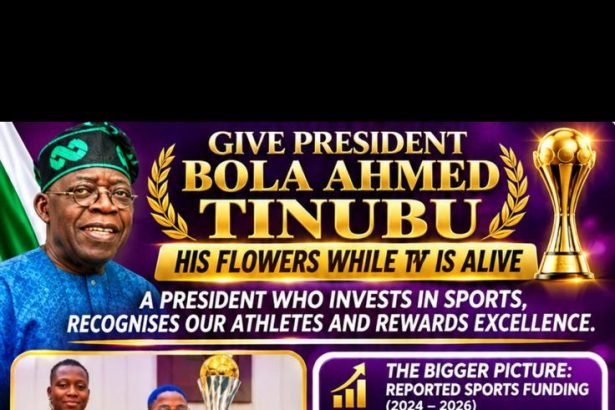
𝐆𝐈𝐕𝐄 𝐏𝐑𝐄𝐒𝐈𝐃𝐄𝐍𝐓 𝐁𝐎𝐋𝐀 𝐀𝐇𝐌𝐄𝐃 𝐓𝐈𝐍𝐔𝐁𝐔 𝐇𝐈𝐒 𝐅𝐋𝐎𝐖𝐄𝐑𝐒 𝐖𝐇𝐈𝐋𝐄 𝐇𝐄 𝐈𝐒 𝐀𝐋𝐈𝐕𝐄
𝐅𝐑𝐎𝐌 $𝟏𝟎𝟎,𝟎𝟎𝟎 𝐑𝐄𝐖𝐀𝐑𝐃𝐒 𝐅𝐎𝐑 𝐒𝐔𝐏𝐄𝐑 𝐅𝐀𝐋𝐂𝐎𝐍𝐒 𝐓𝐎 𝐌𝐔𝐋𝐓𝐈𝐁𝐈𝐋𝐋𝐈𝐎𝐍-𝐍𝐀𝐈𝐑𝐀 𝐒𝐏𝐎𝐑𝐓𝐒 𝐂𝐎𝐌𝐌𝐈𝐓𝐌𝐄𝐍𝐓𝐒: 𝐀 𝐂𝐋𝐎𝐒𝐄𝐑 𝐋𝐎𝐎𝐊 𝐀𝐓 𝐓𝐇𝐄 𝐑𝐄𝐂𝐎𝐑𝐃 𝐀𝐍𝐃 𝐖𝐇𝐘 𝐒𝐈𝐋𝐕𝐄𝐑 𝐌𝐄𝐃𝐀𝐋𝐒 𝐌𝐀𝐓𝐓𝐄𝐑
𝐑𝐞𝐜𝐨𝐠𝐧𝐢𝐭𝐢𝐨𝐧 𝐬𝐡𝐨𝐮𝐥𝐝 𝐧𝐞𝐯𝐞𝐫 𝐛𝐞 𝐝𝐞𝐭𝐞𝐫𝐦𝐢𝐧𝐞𝐝 𝐛𝐲 𝐩𝐨𝐥𝐢𝐭𝐢𝐜𝐚𝐥 𝐚𝐟𝐟𝐢𝐥𝐢𝐚𝐭𝐢𝐨𝐧.
By 𝐏𝐚𝐮𝐥 𝐋𝐮𝐜𝐤𝐲 𝐎𝐤𝐨𝐤𝐮
Former Nigerian International | 𝟏𝟗𝟖𝟒 𝐀𝐅𝐂𝐎𝐍 𝐒𝐢𝐥𝐯𝐞𝐫 𝐌𝐞𝐝𝐚𝐥𝐢𝐬𝐭
𝗔𝗨𝗧𝗛𝗢𝗥’𝗦 𝗡𝗢𝗧𝗘 — 𝗘𝗗𝗜𝗧𝗢𝗥𝗜𝗔𝗟 𝗜𝗡𝗗𝗘𝗣𝗘𝗡𝗗𝗘𝗡𝗖𝗘
This publication is a 𝗽𝗲𝗿𝘀𝗼𝗻𝗮𝗹, 𝘃𝗼𝗹𝘂𝗻𝘁𝗮𝗿𝘆 𝗮𝗻𝗱 𝗶𝗻𝗱𝗲𝗽𝗲𝗻𝗱𝗲𝗻𝘁 𝗷𝗼𝘂𝗿𝗻𝗮𝗹𝗶𝘀𝘁𝗶𝗰 𝗰𝗼𝗻𝘁𝗿𝗶𝗯𝘂𝘁𝗶𝗼𝗻. I do not belong to any political party in Nigeria, and my observations are guided by 𝗳𝗮𝗰𝘁𝘀, 𝗽𝘂𝗯𝗹𝗶𝗰 𝗿𝗲𝗰𝗼𝗿𝗱𝘀 𝗮𝗻𝗱 𝘃𝗲𝗿𝗶𝗳𝗶𝗮𝗯𝗹𝗲 𝗲𝘃𝗶𝗱𝗲𝗻𝗰𝗲.
𝗖𝗿𝗲𝗱𝗶𝗯𝗹𝗲 𝗷𝗼𝘂𝗿𝗻𝗮𝗹𝗶𝘀𝗺 𝗿𝗲𝗾𝘂𝗶𝗿𝗲𝘀 𝘂𝘀 𝘁𝗼 𝗴𝗶𝘃𝗲 𝗰𝗿𝗲𝗱𝗶𝘁 𝘄𝗵𝗲𝗿𝗲 𝗶𝘁 𝗶𝘀 𝗱𝘂𝗲, 𝗷𝘂𝘀𝘁 𝗮𝘀 𝗶𝘁 𝗿𝗲𝗾𝘂𝗶𝗿𝗲𝘀 𝘂𝘀 𝘁𝗼 𝗵𝗼𝗹𝗱 𝘁𝗵𝗼𝘀𝗲 𝗶𝗻 𝗮𝘂𝘁𝗵𝗼𝗿𝗶𝘁𝘆 𝗮𝗰𝗰𝗼𝘂𝗻𝘁𝗮𝗯𝗹𝗲. Recognition and accountability are not mutually exclusive.
𝐋𝐎𝐎𝐊 𝐀𝐓 𝐓𝐇𝐄 𝐑𝐄𝐂𝐎𝐑𝐃 — 𝐍𝐎𝐓 𝐉𝐔𝐒𝐓 𝐎𝐍𝐄 𝐀𝐍𝐍𝐎𝐔𝐍𝐂𝐄𝐌𝐄𝐍𝐓
I have followed Nigerian sports for decades, first as a player who represented our country and subsequently as someone concerned about its history, development and administration.
That experience is why I believe the sporting actions of 𝐏𝐫𝐞𝐬𝐢𝐝𝐞𝐧𝐭 𝐁𝐨𝐥𝐚 𝐀𝐡𝐦𝐞𝐝 𝐓𝐢𝐧𝐮𝐛𝐮 deserve examination together rather than in isolation.
Consider the figures and commitments: 𝐔𝐒$𝟏𝟎𝟎,𝟎𝟎𝟎 rewards to championship-winning athletes, national honours, housing awards, recognition of AFCON silver medalists, a reported 𝟐𝟐𝟕% sports-budget increase, and a ₦𝟏𝟐 𝐛𝐢𝐥𝐥𝐢𝐨𝐧 intervention to address outstanding national-team obligations.
Each development tells part of the story. Together, they provide a fuller picture of the administration’s sporting priorities.
My purpose is to examine those actions on their merits, while distinguishing what has been announced, approved and actually delivered.
𝐒𝐔𝐏𝐄𝐑 𝐅𝐀𝐋𝐂𝐎𝐍𝐒: 𝐅𝐑𝐎𝐌 𝐏𝐑𝐄𝐒𝐈𝐃𝐄𝐍𝐓𝐈𝐀𝐋 𝐏𝐑𝐎𝐌𝐈𝐒𝐄 𝐓𝐎 𝐏𝐀𝐘𝐌𝐄𝐍𝐓
On 𝐍𝐨𝐯𝐞𝐦𝐛𝐞𝐫 𝟐, 𝟐𝟎𝟐𝟔, the 𝐍𝐚𝐭𝐢𝐨𝐧𝐚𝐥 𝐒𝐩𝐨𝐫𝐭𝐬 𝐂𝐨𝐦𝐦𝐢𝐬𝐬𝐢𝐨𝐧 (𝐍𝐒𝐂) announced that Nigeria’s 𝐒𝐮𝐩𝐞𝐫 𝐅𝐚𝐥𝐜𝐨𝐧𝐬 had begun receiving approximately ₦𝟏𝟒𝟎 𝐦𝐢𝐥𝐥𝐢𝐨𝐧 each, representing the reported naira equivalent of the 𝐔𝐒$𝟏𝟎𝟎,𝟎𝟎𝟎 promised by President Tinubu.
The reward followed Nigeria’s historic tenth Women’s Africa Cup of Nations title, secured after a dramatic 𝟑–𝟐 comeback victory over hosts Morocco on 𝐉𝐮𝐥𝐲 𝟐𝟔, 𝟐𝟎𝟐𝟓.
At the presidential reception on 𝐉𝐮𝐥𝐲 𝟐𝟖, 𝟐𝟎𝟐𝟓, Tinubu announced 𝐔𝐒$𝟏𝟎𝟎,𝟎𝟎𝟎 for each player and 𝐔𝐒$𝟓𝟎,𝟎𝟎𝟎 for each technical official, alongside national honours and three-bedroom apartments in Abuja.
The latest payment announcement was communicated through 𝐊𝐨𝐥𝐚 𝐃𝐚𝐧𝐢𝐞𝐥, Special Assistant on Media to NSC Director-General 𝐁𝐮𝐤𝐨𝐥𝐚 𝐎𝐥𝐨𝐩𝐚𝐝𝐞. The Commission is chaired by 𝐒𝐡𝐞𝐡𝐮 𝐃𝐢𝐤𝐤𝐨.
Super Falcons captain 𝐑𝐚𝐬𝐡𝐞𝐞𝐝𝐚𝐭 𝐀𝐣𝐢𝐛𝐚𝐝𝐞 was also reported to have expressed appreciation for the fulfilment of the presidential commitment.
The distinction between announcing and paying a reward is important. The reported commencement of payments is a measurable development, although individual payment confirmation remains relevant when assessing completion.
𝐃’𝐓𝐈𝐆𝐑𝐄𝐒𝐒: 𝐀𝐍𝐎𝐓𝐇𝐄𝐑 𝐔𝐒$𝟏𝟎𝟎,𝟎𝟎𝟎 𝐑𝐄𝐖𝐀𝐑𝐃
The Super Falcons were not the only beneficiaries of this approach.
Following 𝐃’𝐓𝐢𝐠𝐫𝐞𝐬𝐬’s fifth consecutive Women’s AfroBasket championship in 𝟐𝟎𝟐𝟓, President Tinubu announced 𝐔𝐒$𝟏𝟎𝟎,𝟎𝟎𝟎 for each player, 𝐔𝐒$𝟓𝟎,𝟎𝟎𝟎 for each official, national honours and housing awards.
On 𝐒𝐞𝐩𝐭𝐞𝐦𝐛𝐞𝐫 𝟗, 𝟐𝟎𝟐𝟔, the NSC confirmed that the cash rewards had been credited to the beneficiaries’ accounts.
The Commission also reported that the team’s housing documents and national-honours certificates had previously been presented.
These are two distinct national teams, competing in two different sports, whose achievements were recognised through substantial presidential reward packages.
They illustrate why the discussion should not begin and end with one football announcement.
𝐓𝐇𝐄 𝐒𝐏𝐎𝐑𝐓𝐒 𝐁𝐔𝐃𝐆𝐄𝐓: 𝐀 𝟐𝟐𝟕% 𝐈𝐍𝐂𝐑𝐄𝐀𝐒𝐄
The budgetary record deserves equal attention.
During the 𝐉𝐚𝐧𝐮𝐚𝐫𝐲 𝟐𝟎𝟐𝟓 budget defence, House Committee on Sports Chairman 𝐊𝐚𝐛𝐢𝐫𝐮 𝐀𝐦𝐚𝐝𝐮 reported that the sports-sector expenditure framework had increased from:
₦𝟐𝟗.𝟎𝟖 𝐛𝐢𝐥𝐥𝐢𝐨𝐧 in 𝟐𝟎𝟐𝟒
to
₦𝟗𝟒.𝟗𝟓 𝐛𝐢𝐥𝐥𝐢𝐨𝐧 in 𝟐𝟎𝟐𝟓.
That represented an increase of approximately 𝟐𝟐𝟕%, or nearly ₦𝟔𝟓.𝟖𝟕 𝐛𝐢𝐥𝐥𝐢𝐨𝐧 in additional nominal budgetary provision.
The Committee publicly commended President Tinubu for the increase.
These figures concern the broader sports-sector framework, not money exclusively allocated to the 𝐍𝐢𝐠𝐞𝐫𝐢𝐚 𝐅𝐨𝐨𝐭𝐛𝐚𝐥𝐥 𝐅𝐞𝐝𝐞𝐫𝐚𝐭𝐢𝐨𝐧 (𝐍𝐅𝐅).
The NFF separately approved a proposed 𝟐𝟎𝟐𝟓 budget of approximately ₦𝟏𝟕.𝟔 𝐛𝐢𝐥𝐥𝐢𝐨𝐧 through its Congress.
These figures cannot all be added together as separate government payments. A federation’s approved budget proposal does not establish that the entire sum was subsequently released.
Nevertheless, the reported 𝟐𝟐𝟕% increase is significant evidence of a larger nominal financial commitment to the sports sector.
The next questions are equally important: how much was released, how was it spent, and what measurable improvements followed?
𝐓𝐈𝐍𝐔𝐁𝐔’𝐒 𝐅𝐈𝐍𝐀𝐍𝐂𝐈𝐀𝐋 𝐂𝐎𝐌𝐌𝐈𝐓𝐌𝐄𝐍𝐓 𝐓𝐎 𝐍𝐈𝐆𝐄𝐑𝐈𝐀𝐍 𝐒𝐏𝐎𝐑𝐓𝐒 𝐀𝐍𝐃 𝐅𝐎𝐎𝐓𝐁𝐀𝐋𝐋
Since President Bola Ahmed Tinubu assumed office on May 29, 2023, the reported financial commitments to Nigerian sports have expanded significantly.
𝐒𝐏𝐎𝐑𝐓𝐒: ₦𝟑𝟐𝟕.𝟔𝟑 𝐁𝐈𝐋𝐋𝐈𝐎𝐍
The combined reported sports-sector budget figures for 2024, 2025 and 2026 amount to approximately ₦327.63 billion.
This includes ₦29.08 billion for 2024, ₦94.95 billion in the 2025 expenditure framework and ₦203.60 billion in the reported 2026 National Sports Commission budget proposal.
𝐅𝐎𝐎𝐓𝐁𝐀𝐋𝐋: ₦𝟔𝟓.𝟔𝟎𝟒 𝐁𝐈𝐋𝐋𝐈𝐎𝐍 𝐈𝐍 𝐈𝐃𝐄𝐍𝐓𝐈𝐅𝐈𝐄𝐃 𝐅𝐈𝐍𝐀𝐍𝐂𝐈𝐀𝐋 𝐅𝐈𝐆𝐔𝐑𝐄𝐒
Football, Nigeria’s most widely followed sport, accounts for a substantial share of the financial commitments identified in the available records.
The NFF’s reported budgets and federal allocation for 2024–2026, combined with the ₦17 billion presidential intervention, amount to approximately ₦51.404 billion.
Additionally, the 2026 National Sports Commission budget proposal earmarked ₦14.2 billion for Nigeria’s participation in major men’s and women’s football tournaments, including AFCON and other FIFA competitions.
Together, these identified football-related figures amount to ₦65.604 billion across the cited budgets, intervention and tournament provision.
Importantly, National Sports Commission Chairman Shehu Dikko stated in September 2026 that the ₦17 billion presidential intervention had already been transferred to the NFF between December 2023 and January 2024.
The financial figures illustrate the scale of the administration’s reported commitments to sporting programmes and, particularly, to Nigerian football.
𝐓𝐡𝐞 𝐟𝐢𝐠𝐮𝐫𝐞𝐬 𝐝𝐞𝐬𝐞𝐫𝐯𝐞 𝐭𝐨 𝐛𝐞 𝐬𝐞𝐞𝐧.
𝐓𝐡𝐞 𝐩𝐫𝐨𝐦𝐢𝐬𝐞𝐬 𝐝𝐞𝐬𝐞𝐫𝐯𝐞 𝐭𝐨 𝐛𝐞 𝐤𝐞𝐩𝐭.
𝐀𝐧𝐝 𝐭𝐡𝐞 𝐚𝐭𝐡𝐥𝐞𝐭𝐞𝐬 𝐰𝐡𝐨 𝐫𝐞𝐩𝐫𝐞𝐬𝐞𝐧𝐭 𝐍𝐢𝐠𝐞𝐫𝐢𝐚 𝐝𝐞𝐬𝐞𝐫𝐯𝐞 𝐭𝐨 𝐛𝐞 𝐫𝐞𝐜𝐨𝐠𝐧𝐢𝐬𝐞𝐝.
𝐓𝐇𝐄 ₦𝟏𝟐 𝐁𝐈𝐋𝐋𝐈𝐎𝐍 𝐏𝐑𝐄𝐒𝐈𝐃𝐄𝐍𝐓𝐈𝐀𝐋 𝐈𝐍𝐓𝐄𝐑𝐕𝐄𝐍𝐓𝐈𝐎𝐍
Another important decision came on 𝐉𝐚𝐧𝐮𝐚𝐫𝐲 𝟕, 𝟐𝟎𝟐𝟒, when the Presidency announced Tinubu’s approval of ₦𝟏𝟐 𝐛𝐢𝐥𝐥𝐢𝐨𝐧 to address outstanding obligations owed to Nigeria’s national teams.
According to the announcement, the intervention covered obligations involving the Super Eagles and other national teams, including coaches’ salaries reportedly outstanding for as long as 𝟏𝟓 𝐦𝐨𝐧𝐭𝐡𝐬, allowances and previously promised payments.
That intervention is significant because it addressed liabilities extending beyond the immediate tournament preparations.
Later reports referred to a ₦𝟏𝟕 𝐛𝐢𝐥𝐥𝐢𝐨𝐧 debt-clearance figure. The available record does not establish that this was a separate additional cash payment on top of the original ₦𝟏𝟐 𝐛𝐢𝐥𝐥𝐢𝐨𝐧 approval. It should therefore be treated as a reported adjustment requiring reconciliation, rather than automatically counted twice.
For me, the importance of the presidential intervention is accompanied by a serious administrative question.
If budgets are prepared and defended annually, why do athletes and coaches still experience unpaid obligations?
Where the President approves an intervention, the responsible agencies must document the releases, recipients and final payments.
𝐏𝐫𝐞𝐬𝐢𝐝𝐞𝐧𝐭𝐢𝐚𝐥 𝐚𝐩𝐩𝐫𝐨𝐯𝐚𝐥 𝐢𝐬 𝐨𝐧𝐞 𝐬𝐭𝐞𝐩. 𝐃𝐞𝐥𝐢𝐯𝐞𝐫𝐲 𝐭𝐨 𝐭𝐡𝐞 𝐢𝐧𝐭𝐞𝐧𝐝𝐞𝐝 𝐛𝐞𝐧𝐞𝐟𝐢𝐜𝐢𝐚𝐫𝐲 𝐢𝐬 𝐭𝐡𝐞 𝐧𝐞𝐱𝐭.
𝐔𝐍𝐃𝐄𝐑 𝐓𝐈𝐍𝐔𝐁𝐔’𝐒 𝐀𝐃𝐌𝐈𝐍𝐈𝐒𝐓𝐑𝐀𝐓𝐈𝐎𝐍: 𝐍𝐏𝐅𝐋 𝐂𝐇𝐀𝐌𝐏𝐈𝐎𝐍𝐒’ 𝐏𝐑𝐈𝐙𝐄 𝐑𝐈𝐒𝐄𝐒 𝐅𝐑𝐎𝐌 ₦𝟐𝟎𝟎 𝐌𝐈𝐋𝐋𝐈𝐎𝐍 𝐓𝐎 ₦𝟏 𝐁𝐈𝐋𝐋𝐈𝐎𝐍
President Bola Ahmed Tinubu’s administration has also overseen a major announcement concerning Nigeria’s domestic football league.
On 𝐉𝐮𝐧𝐞 𝟐𝟑, 𝟐𝟎𝟐𝟔, National Sports Commission Chairman 𝐒𝐡𝐞𝐡𝐮 𝐃𝐢𝐤𝐤𝐨 announced that the champions of the 2026/27 Nigeria Premier Football League would receive a minimum of 𝐍₦𝟏 𝐛𝐢𝐥𝐥𝐢𝐨𝐧, compared with the previous 𝐍₦𝟐𝟎𝟎 𝐦𝐢𝐥𝐥𝐢𝐨𝐧.
That represents a 𝐟𝐢𝐯𝐞𝐟𝐨𝐥𝐝 𝐢𝐧𝐜𝐫𝐞𝐚𝐬𝐞 of 𝐟𝐨𝐮𝐫 𝐡𝐮𝐧𝐝𝐫𝐞𝐝 𝐩𝐞𝐫𝐜𝐞𝐧𝐭 (𝟒𝟎𝟎%).
The announced prize structure also provides for 𝐍₦𝟓𝟎𝟎 𝐦𝐢𝐥𝐥𝐢𝐨𝐧 for the runners-up and 𝐍₦𝟑𝟎𝟎 𝐦𝐢𝐥𝐥𝐢𝐨𝐧 for the third-placed club, subject to final confirmation by league authorities.
The meeting between the National Sports Commission and Nigeria Football Federation also produced an agreement to introduce a proposed minimum monthly wage of 𝐍₦𝟐 𝐦𝐢𝐥𝐥𝐢𝐨𝐧 for NPFL players, alongside stricter club-licensing requirements.
These developments extend the administration’s sporting record beyond rewards for national teams to initiatives affecting professional football clubs and players within Nigeria.
They also illustrate the importance of examining the full sporting record rather than focusing exclusively on international tournament results.
𝐀 𝐏𝐑𝐄𝐒𝐈𝐃𝐄𝐍𝐓 𝐖𝐇𝐎 𝐀𝐋𝐒𝐎 𝐑𝐄𝐂𝐎𝐆𝐍𝐈𝐒𝐄𝐃 𝐒𝐈𝐋𝐕𝐄𝐑
Beyond the financial figures, one presidential decision carries special meaning for me.
The 𝐒𝐮𝐩𝐞𝐫 𝐄𝐚𝐠𝐥𝐞𝐬 finished second at the 𝟐𝟎𝟐𝟑 Africa Cup of Nations, played in Côte d’Ivoire in early 𝟐𝟎𝟐𝟒.
They lost the final to the host nation.
Nevertheless, President Tinubu received the team, conferred national honours and announced housing and land rewards.
On 𝐃𝐞𝐜𝐞𝐦𝐛𝐞𝐫 𝟐𝟐, 𝟐𝟎𝟐𝟓, a Federal Government delegation presented national-honours certificates, housing title documents and confirmation of land allocations to members of the team.
This decision recognised a team that had reached a continental final but had not won the trophy.
That distinction matters.
I have heard people, including former footballers, question why a team that finishes second should receive substantial recognition.
They are entitled to that opinion.
But I ask a different question.
𝐖𝐡𝐞𝐧 𝐝𝐢𝐝 𝐰𝐢𝐧𝐧𝐢𝐧𝐠 𝐬𝐢𝐥𝐯𝐞𝐫 𝐛𝐞𝐜𝐨𝐦𝐞 𝐟𝐚𝐢𝐥𝐮𝐫𝐞?
𝐈 𝐖𝐀𝐒 𝐓𝐇𝐄𝐑𝐄 𝐈𝐍 𝟏𝟗𝟖𝟒
I was a member of Nigeria’s 𝐆𝐫𝐞𝐞𝐧 𝐄𝐚𝐠𝐥𝐞𝐬 team that won silver at the 𝟏𝟗𝟖𝟒 Africa Cup of Nations in Côte d’Ivoire.
We defeated Ghana 𝟐–𝟏, recovered from 𝟐–𝟎 down to draw 𝟐–𝟐 against Malawi, and advanced from our group.
Then came our unforgettable semifinal against Egypt.
We trailed 𝟐–𝟎, fought back to 𝟐–𝟐 and eventually won 𝟖–𝟕 on penalties.
Imagine the excitement in Nigeria.
Imagine the happiness of supporters who watched us overcome those challenges and reach the final.
On 𝐌𝐚𝐫𝐜𝐡 𝟏𝟖, 𝟏𝟗𝟖𝟒, Cameroon defeated us 𝟑–𝟏.
We returned with silver medals.
Under 𝐂𝐡𝐢𝐞𝐟 𝐅𝐞𝐬𝐭𝐮𝐬 𝐀𝐝𝐞𝐠𝐛𝐨𝐲𝐞 𝐎𝐧𝐢𝐠𝐛𝐢𝐧𝐝𝐞, we had become the first Nigerian senior national football team to reach an AFCON final outside Nigeria.
That was a historic achievement.
Yet we did not receive recognition and material rewards comparable to those being extended to today’s silver medalists. I remember having to make my own way home.
I do not recount this experience to diminish today’s players or demand that every generation receive identical benefits.
I recount it because I understand what recognition means when athletes have given their best to their country.
When President Tinubu recognised the 2023 AFCON silver medalists, I saw an example of a different approach to acknowledging sporting achievement.
𝐒𝐢𝐥𝐯𝐞𝐫 𝐢𝐬 𝐧𝐨𝐭 𝐠𝐨𝐥𝐝. 𝐁𝐮𝐭 𝐬𝐢𝐥𝐯𝐞𝐫 𝐢𝐬 𝐧𝐨𝐭 𝐟𝐚𝐢𝐥𝐮𝐫𝐞.
𝐓𝐇𝐄 𝐏𝐑𝐄𝐒𝐈𝐃𝐄𝐍𝐓’𝐒 𝐒𝐏𝐎𝐑𝐓𝐈𝐍𝐆 𝐑𝐄𝐂𝐎𝐑𝐃 𝐃𝐄𝐒𝐄𝐑𝐕𝐄𝐒 𝐓𝐎 𝐁𝐄 𝐄𝐗𝐀𝐌𝐈𝐍𝐄𝐃 𝐀𝐒 𝐀 𝐖𝐇𝐎𝐋𝐄
Consider the documented actions together.
The Super Falcons received a 𝐔𝐒$𝟏𝟎𝟎,𝟎𝟎𝟎-per-player reward commitment, with payments now reported to have commenced.
D’Tigress received comparable presidential rewards, with the NSC confirming the cash payments.
The Super Eagles’ silver-medal achievement was recognised through national honours and property awards.
The sports-sector expenditure framework increased by a reported 𝟐𝟐𝟕% between 2024 and 2025.
And a ₦𝟏𝟐 𝐛𝐢𝐥𝐥𝐢𝐨𝐧 presidential intervention was approved to address outstanding national-team obligations.
These actions involve different forms of support: direct athlete rewards, national recognition, annual budgetary provisions and targeted financial intervention.
They should not be confused with one another, but neither should they be ignored when assessing the administration’s sporting record.
A complete comparison with previous presidents would require examining their respective budgets, reward programmes, inflation-adjusted spending, delivery records and sporting outcomes.
I can speak confidently about the significance these recent actions hold for me as a former international. I also believe the financial record deserves serious comparative research rather than an unsupported historical ranking.
𝐀𝐂𝐊𝐍𝐎𝐖𝐋𝐄𝐃𝐆𝐈𝐍𝐆 𝐒𝐔𝐏𝐏𝐎𝐑𝐓 𝐃𝐎𝐄𝐒 𝐍𝐎𝐓 𝐄𝐍𝐃 𝐀𝐂𝐂𝐎𝐔𝐍𝐓𝐀𝐁𝐈𝐋𝐈𝐓𝐘
My assessment of President Bola Ahmed Tinubu’s contributions to Nigerian sports is not an endorsement of any political party. It is an examination of documented actions, financial commitments and recognition of our athletes.
𝐑𝐞𝐜𝐨𝐠𝐧𝐢𝐭𝐢𝐨𝐧 𝐬𝐡𝐨𝐮𝐥𝐝 𝐧𝐞𝐯𝐞𝐫 𝐛𝐞 𝐝𝐞𝐭𝐞𝐫𝐦𝐢𝐧𝐞𝐝 𝐛𝐲 𝐩𝐨𝐥𝐢𝐭𝐢𝐜𝐚𝐥 𝐚𝐟𝐟𝐢𝐥𝐢𝐚𝐭𝐢𝐨𝐧.
We should be able to acknowledge a President’s contributions to sports without belonging to his political party, just as we should be able to question his administration’s decisions without belonging to the opposition.
𝐆𝐢𝐯𝐢𝐧𝐠 𝐜𝐫𝐞𝐝𝐢𝐭 𝐰𝐡𝐞𝐫𝐞 𝐢𝐭 𝐢𝐬 𝐝𝐮𝐞 𝐢𝐬 𝐧𝐨𝐭 𝐩𝐨𝐥𝐢𝐭𝐢𝐜𝐚𝐥 𝐥𝐨𝐲𝐚𝐥𝐭𝐲.
𝐈𝐭 𝐢𝐬 𝐚 𝐦𝐚𝐭𝐭𝐞𝐫 𝐨𝐟 𝐟𝐚𝐢𝐫𝐧𝐞𝐬𝐬 𝐚𝐧𝐝 𝐢𝐧𝐭𝐞𝐠𝐫𝐢𝐭𝐲.
Recognition of presidential action should never shield sports administrators from scrutiny.
The 𝐍𝐅𝐅, the 𝐍𝐒𝐂 and every institution receiving public funds should account for the resources entrusted to them.
Where athletes remain unpaid, officials should explain why.
Where funds have been released, the records should show their destination.
Where credible allegations of mismanagement arise, they should be investigated through the appropriate institutions.
These are not arguments against funding sports. They are arguments for ensuring that sporting investments reach their intended purpose.
Nor does acknowledging Tinubu’s documented sporting actions require anyone to overlook economic hardship or support his political party.
I am examining sports.
That is my subject, my experience and my responsibility as a commentator.
𝐖𝐇𝐄𝐍 𝐘𝐎𝐔 𝐀𝐃𝐃 𝐈𝐓 𝐀𝐋𝐋 𝐔𝐏, 𝐃𝐎𝐄𝐒 𝐓𝐇𝐄 𝐅𝐈𝐆𝐔𝐑𝐄 𝐒𝐔𝐑𝐏𝐑𝐈𝐒𝐄 𝐘𝐎𝐔?
Now, let me ask Nigerians a question.
When you consider the reported ₦327.63 billion in sports budget figures for 2024–2026 under President Bola Ahmed Tinubu, does the cumulative amount surprise you?
That is why I decided to bring these figures together.
We have witnessed sporting commitments under previous administrations. Federal budget records show allocations of approximately ₦12.40 billion for the National Sports Commission and related sporting bodies in 2011, while the 2015 sports allocation stood at approximately ₦6.66 billion.
Under President Muhammadu Buhari, larger amounts appeared in the Federal Ministry of Youth and Sports Development’s budgets, although those totals included the National Youth Service Corps and therefore cannot be treated entirely as sports expenditure.
Under the Tinubu administration, the reported sports-sector framework rose from ₦29.08 billion in 2024 to ₦94.95 billion in 2025, a 227% increase. The reported 2026 NSC proposal added another ₦203.60 billion to the financial picture.
These are figures that deserve to be examined together and understood in their proper historical context.
But beyond the budgets are the athletes.
The Super Eagles who carry our hopes.
The Super Falcons who bring us continental glory.
D’Tigress, whose achievements inspire another generation.
And the many Nigerian sportsmen and women whose sacrifices make these moments possible.
When we celebrate a winning goal, a continental championship or an unforgettable sporting achievement, we are witnessing the results of talent, discipline, preparation and institutional support.
Sports bring joy into our living rooms.
Sports create memories across generations.
Sports give Nigerians something to celebrate together.
That is why financial commitments to our athletes matter.
And that is why I believe the sporting record deserves serious attention, proper historical comparison and recognition based on evidence rather than political affiliation.
The figures tell part of the story.
The athletes give that story its meaning.
𝐌𝐘 𝐅𝐈𝐍𝐀𝐋 𝐖𝐎𝐑𝐃: 𝐋𝐄𝐓 𝐔𝐒 𝐋𝐄𝐀𝐑𝐍 𝐓𝐎 𝐀𝐏𝐏𝐑𝐄𝐂𝐈𝐀𝐓𝐄
I remember 𝟏𝟗𝟖𝟒.
I remember the excitement we brought Nigerians, our victory over Ghana, our comeback against Malawi, our semifinal triumph over Egypt and the disappointment of losing the final.
I remember the sacrifices.
I remember the celebrations.
And I remember what it felt like when the tournament ended and the recognition did not match our sacrifice.
That experience shapes how I view the treatment of today’s athletes.
It is why I appreciate President Tinubu’s recognition of the Super Eagles’ silver medals, his rewards to the Super Falcons and D’Tigress, and the documented financial commitments to Nigerian sports.
The goal must always be to win.
But the journey matters.
The sacrifices matter.
The excitement matters.
The memories matter.
𝐀𝐧𝐝 𝐭𝐡𝐞 𝐚𝐭𝐡𝐥𝐞𝐭𝐞𝐬 𝐦𝐚𝐭𝐭𝐞𝐫.
We should expect the highest standards from those who represent Nigeria.
We should also recognise meaningful achievements, including those that fall short of the ultimate trophy.
And when public officials make commitments to those athletes, we should examine the promises, the payments and the results.
𝐋𝐞𝐭 𝐭𝐡𝐞 𝐟𝐢𝐠𝐮𝐫𝐞𝐬 𝐬𝐩𝐞𝐚𝐤.
𝐋𝐞𝐭 𝐭𝐡𝐞 𝐫𝐞𝐜𝐨𝐫𝐝𝐬 𝐬𝐡𝐨𝐰.
𝐋𝐞𝐭 𝐭𝐡𝐞 𝐩𝐫𝐨𝐦𝐢𝐬𝐞𝐬 𝐛𝐞 𝐤𝐞𝐩𝐭.
𝐋𝐞𝐭 𝐭𝐡𝐞 𝐚𝐭𝐡𝐥𝐞𝐭𝐞𝐬 𝐤𝐧𝐨𝐰.
𝐓𝐡𝐚𝐭 𝐭𝐡𝐞𝐢𝐫 𝐞𝐟𝐟𝐨𝐫𝐭𝐬 𝐚𝐫𝐞 𝐬𝐞𝐞𝐧.
𝐓𝐡𝐚𝐭 𝐭𝐡𝐞𝐢𝐫 𝐬𝐚𝐜𝐫𝐢𝐟𝐢𝐜𝐞𝐬 𝐚𝐫𝐞 𝐯𝐚𝐥𝐮𝐞𝐝.
𝐓𝐡𝐚𝐭 𝐭𝐡𝐞𝐢𝐫 𝐬𝐞𝐫𝐯𝐢𝐜𝐞 𝐢𝐬 𝐫𝐞𝐦𝐞𝐦𝐛𝐞𝐫𝐞𝐝.
𝐆𝐨𝐥𝐝 𝐝𝐞𝐬𝐞𝐫𝐯𝐞𝐬 𝐜𝐞𝐥𝐞𝐛𝐫𝐚𝐭𝐢𝐨𝐧.
𝐒𝐢𝐥𝐯𝐞𝐫 𝐝𝐞𝐬𝐞𝐫𝐯𝐞𝐬 𝐫𝐞𝐜𝐨𝐠𝐧𝐢𝐭𝐢𝐨𝐧.
𝐀𝐧𝐝 𝐞𝐯𝐞𝐫𝐲 𝐚𝐭𝐡𝐥𝐞𝐭𝐞 𝐰𝐡𝐨 𝐬𝐞𝐫𝐯𝐞𝐬 𝐍𝐢𝐠𝐞𝐫𝐢𝐚 𝐰𝐢𝐭𝐡 𝐡𝐨𝐧𝐨𝐮𝐫 𝐝𝐞𝐬𝐞𝐫𝐯𝐞𝐬 𝐨𝐮𝐫 𝐚𝐩𝐩𝐫𝐞𝐜𝐢𝐚𝐭𝐢𝐨𝐧.
𝗣𝗮𝘂𝗹 𝗟𝘂𝗰𝗸𝘆 𝗢𝗸𝗼𝗸𝘂
FIFA Legend | Former Nigeria Flying Eagles Vice-Captain | Former Super Eagles International | AFCON Silver Medalist | Football Historian | Football Analyst | Investigative Football Writer | Journalist-at-Large | Founder & CEO, Greater Tomorrow Children’s Fund (GTCF)
𝗣𝗹𝗲𝗮𝘀𝗲 𝗳𝗲𝗲𝗹 𝗳𝗿𝗲𝗲 𝘁𝗼 𝘀𝗵𝗮𝗿𝗲 𝘁𝗵𝗶𝘀 𝗮𝗿𝘁𝗶𝗰𝗹𝗲.
𝗪𝗲 𝗮𝗿𝗲 𝗮𝗹𝗹 𝗶𝗻 𝘁𝗵𝗶𝘀 𝘁𝗼𝗴𝗲𝘁𝗵𝗲𝗿.
𝐑𝐞𝐬𝐞𝐚𝐫𝐜𝐡 𝐚𝐧𝐝 𝐓𝐫𝐚𝐧𝐬𝐩𝐚𝐫𝐞𝐧𝐜𝐲 𝐍𝐨𝐭𝐞: The 𝟏𝟗𝟖𝟒 AFCON results were checked against historical tournament records maintained by RSSSF and 11v11. The 𝐍𝐨𝐯𝐞𝐦𝐛𝐞𝐫 𝟐, 𝟐𝟎𝟐𝟔 Super Falcons payment announcement is attributed to the National Sports Commission, with reporting by Sports247, Premium Times and THISDAY. Reported commencement of payments is distinguished from independent verification of every individual transfer. The 𝐒𝐞𝐩𝐭𝐞𝐦𝐛𝐞𝐫 𝟗, 𝟐𝟎𝟐𝟔 D’Tigress payment confirmation was published by the Federal Ministry of Information and National Orientation. The Super Eagles’ housing and national-honours presentation was reported in December 2025. The 𝟐𝟐𝟕% sports-sector budget increase was reported by the House Committee on Sports in January 2025. The 𝐍₦𝟏𝟐 𝐛𝐢𝐥𝐥𝐢𝐨𝐧 intervention was announced by the Presidency in January 2024; later references to 𝐍₦𝟏𝟕 𝐛𝐢𝐥𝐥𝐢𝐨𝐧 are not treated as proof of a separate additional disbursement. Budgetary provisions, approvals and verified payments are distinct. The author’s 1984 recollections and assessments represent his firsthand experience and independent perspective.