
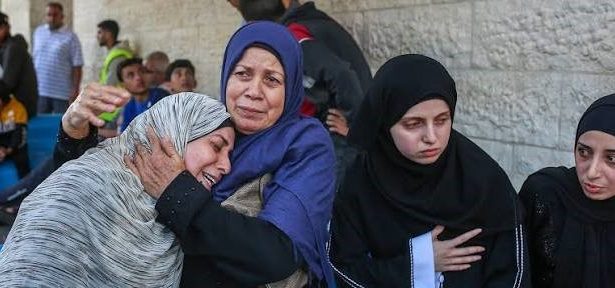
Nearly 50,000 women and girls have been killed or severely injured in Gaza since the outbreak of war in October 2023, with one in every 21 women and girls in the territory affected, according to UN Women.
The United Nations agency estimates that more than 38,000 women and girls have been killed and another 11,700 severely injured during Israeli airstrikes and ground military operations, underscoring the devastating toll of the conflict on Gaza’s female population.
The figures, based on estimates combining reported deaths and severe injuries, represent approximately 4.7 per cent of Gaza’s estimated female population of 1.06 million at the end of 2025.
In a statement highlighting the humanitarian consequences of the conflict, UN Women said women and girls continued to face grave risks despite a ceasefire agreement that took effect in October 2025.
The agency reported that 277 women and girls were among those killed in Gaza over the preceding year, indicating that casualties had continued beyond the initial years of the conflict.
Nearly all women and girls displaced
UN Women said more than 150 evacuation and movement orders had been issued across Gaza by the Israeli military since October 2023, forcing nearly one million women and girls from their homes.
The agency described displacement as almost universal among Gaza’s female population, with many living in tents or damaged buildings without adequate privacy, sanitation and other essentials.
Women and girls are also shouldering much of the responsibility for caring for children, sick and injured relatives, and older people, often without the basic resources needed to meet their families’ needs.
The humanitarian crisis has also severely affected maternal health. According to UN Women, women have been forced to give birth in unsafe and unsanitary conditions, while miscarriages reportedly reached nearly 4,000 in the first six months of 2026 — three times the number recorded during the final six months of 2025.
Women increasingly head Gaza households
The war has also transformed household structures, with the number of women heading households reportedly doubling since October 2023.
UN Women estimates that approximately 86,290 households in Gaza — nearly one in four — are now headed by women, compared with one in nine before the war.
The agency said many women who had lost their husbands, fathers or other relatives were now solely responsible for providing for their families, protecting their children and maintaining household stability amid worsening living conditions.
Beyond bereavement, these women face the combined pressures of displacement, poverty, food shortages and limited access to essential services.
Food insecurity threatens hundreds of thousands
Despite the ceasefire, UN Women said women and girls continued to experience severely restricted access to food, shelter, safe drinking water and hygiene supplies amid ongoing hostilities and insecurity.
The destruction of homes, hospitals, schools, businesses and shops has further complicated access to essential services and basic commodities, while restrictions on humanitarian assistance have compounded the crisis.
The agency estimates that approximately 702,000 women and girls could face crisis-level or worse acute food insecurity between July and December 2026.
The projection is based on an August 13, 2026, Integrated Food Security Phase Classification (IPC) assessment of the Gaza Strip. It indicates that widespread food insecurity could have serious consequences for women’s and girls’ health, including increased risks of malnutrition.
Women’s organisations struggle to meet growing needs
UN Women also raised concerns over declining humanitarian funding and the growing pressure on organisations providing frontline assistance to women and girls in Gaza and the occupied West Bank.
In a survey of 14 women’s organisations, 13 reported that the needs of women and girls had increased since 2025. All the organisations surveyed reported increases in gender-based violence, poverty and mental health distress, while 13 reported a rise in child marriage.
Thirteen of the 14 organisations said they lacked the capacity to meet the growing needs of women and girls.
The funding shortfall has forced nearly two-thirds of the surveyed organisations to place women and girls on waiting lists or turn them away, according to the agency.
UN Women said it was working with women-led and women’s rights organisations in Gaza to provide life-saving and essential services, including protection, gender-based violence case management, legal assistance, mental health and psychosocial support, emergency cash and livelihoods assistance.
Its interventions also include support for women and girls requiring prosthetics, counselling for survivors and efforts to ensure that their experiences and perspectives inform humanitarian response planning.
UN Women calls for full implementation of ceasefire
The agency stressed that the scale of suffering required sustained humanitarian assistance and a response that placed women and girls at the centre of recovery efforts.
UN Women called for the full implementation of the ceasefire, respect for international law, accountability for violations and the protection of women, girls and all civilians.
It also urged that humanitarian assistance be allowed to reach people in need at scale and without obstruction.
“Women and girls must be placed at the centre of response and recovery efforts,” the agency said, stressing that continued support was essential but could not replace the need for peace.
The agency maintained that women and girls in Gaza require not only emergency assistance but also security, dignity and conditions that allow them to rebuild their lives after years of conflict.