
The Lagos State Government has formally unveiled the Lagos State Industrial Policy (LSIP) 2025–2030 as a Comprehensive Framework to drive Industrial Transformation, with the Manufacturing Sector projected to contribute 10.2 per cent to its Real GDP by 2026.
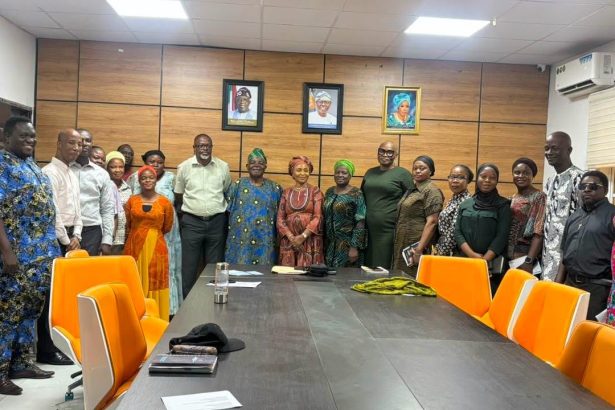
Speaking at the 59th Annual General Meeting of the Manufacturers’ Association of Nigeria (MAN), Ikeja Branch, which was held at the Radisson Blu, Ikeja, on Tuesday, the Hon. Commissioner, MCCTI, Hon. Folashade Bada Ambrose-Medebem, the Special Guest of Honour at the Event, described the LSIP as the most consequential Industrial Framework Lagos has produced in a generation.
The Commissioner, represented at the event by the Director, Commerce Department, Mr. Segun Alogba, said “Built on six pillars, including building a Competitive industrial Base, Creating an enabling Business Environment, Developing MSMEs, Providing Infrastructure, Advancing Skills, and Promoting innovation and sustainability, the Policy translates Federal priorities into State – level actions, with clear implementation mechanisms, timelines, and accountability frameworks”.
“Policies alone do not build factories. Policies alone do not create jobs. What transforms a Policy from paper to prosperity is implementation. The LSIP is not a document to be admired from a distance; it is a roadmap to be followed with discipline and determination”, she emphasised.
She highlighted concrete delivery instruments under the LSIP to include: Regulatory and Administrative reforms to shorten the time required to start, operate, and expand industrial Enterprises, with institutionalised one‑stop investor facilitation and fast‑tracked approvals; Expansion and optimisation of industrial clusters across Ikeja, Apapa, Ilupeju, and the Lekki Free Zone Manufacturing corridor; The Lagos Industrial Development Fund and the LASMECO Partnership with the Bank of Industry, delivering single‑digit, non‑collateralized credit to qualifying small businesses; and The Lagos State Export Readiness Programme (LASERP), designed to carry qualified firms from informal operation to AfCFTA ‑ Grade Exports.
The HC averred that Nigeria’s Manufacturing sector grew by 3.29 per cent (3.29%) year‑on‑year in Q1 2026, being the Sector’s strongest quarterly performance in four years, with the real GDP contribution at 9.57 per cent, further reflecting MAN’s projections of the sector growing by 3.1 per cent (3.1%) in 2026, thus pushing contributions to 10.2 per cent.
In her Address, the Secretary to the State Governor, Mrs. Abimbola Hundeyin-Salu, who was represented by Mrs. Ojelabi Olumuyiwa, Director of Public Affairs, underscored the Administration‘s focus on real‑world outcomes.
She posed critical questions guiding Government Policy: “Can businesses occur more easily? Can Manufacturers reduce their production costs? Can young people find jobs? Can investors come into Lagos with confidence? These are the outcomes that ultimately matter.”
Hundeyin-Salu acknowledged rising production costs, energy challenges, access to finance, and regulatory bottlenecks, reassuring that infrastructure investment in roads, transportation, drainage, and connectivity remains a major priority to support economic activity.
The Chairman of MAN Ikeja Branch, Mr. Thomas Osobu, who welcomed the Policy direction, however, emphasised that Policy inconsistency, multiple taxation, foreign exchange volatility, escalating energy costs, and inadequate infrastructure continue to constrain productivity.
He called for constructive dialogue, noting that “well‑conceived and consistently implemented Policy reforms can unlock Industrial Productivity, stimulate investment, encourage innovation, create quality employment, and position Nigeria as a globally competitive Manufacturing hub.”
Also Speaking, the Ologba of Ogba, HRM Oba Latif Oladimeji Egbeyemi (Madarinkan I), commended the State Government‘s efforts, but, respectfully raised concern about the absence of relevant Ministry‘s officials at a previous MAN engagement in June, 2026, while imploring for stronger, institutionalised engagement, saying “When Government listens to Industries, they grow to enhance employment, Government revenue grows, and communities prosper.”
The Chief Executive Officer of the Lagos State Electricity Regulatory Commission (LASERC), Mrs. Temitope George, acknowledged Manufacturers’ concerns over electricity tariffs and supply, reaffirming LASERC’s commitment to building a functional, transparent, and well‑regulated Electricity market, with a goal that by 2030, every resident of Lagos State will have access to reliable electricity at appropriate pricing.
She implored for continuous engagement between MAN and LASERC on issues affecting industrial clusters.
The AGM also featured a seamless leadership transition, which the Ologba of Ogba commended for its maturity.
The highlight of the event was the presentation of the award of Credence to the Honourable Commissioner, MCCTI, for her commitment to viable solutions in enhancing business patterns across Lagos State.
As the Manufacturers Association of Nigeria marks its 59th anniversary, the Lagos State Government called on manufacturers to partner in driving the industrialization Agenda, leveraging the AfCFTA market of 1.3 billion people and the State’s strategic position as West Africa’s industrial heartbeat.