
𝐌𝐲 𝐚𝐝𝐯𝐢𝐜𝐞 𝐭𝐨 𝐭𝐡𝐞 𝐅𝐥𝐚𝐦𝐢𝐧𝐠𝐨𝐬 𝐚𝐧𝐝 𝐭𝐡𝐞𝐢𝐫 𝐩𝐚𝐫𝐞𝐧𝐭𝐬 𝐨𝐫 𝐠𝐮𝐚𝐫𝐝𝐢𝐚𝐧𝐬, 𝐝𝐫𝐚𝐰𝐢𝐧𝐠 𝐨𝐧 𝐰𝐡𝐚𝐭 𝐰𝐞 𝐞𝐱𝐩𝐞𝐫𝐢𝐞𝐧𝐜𝐞𝐝 𝐚𝐬 𝐅𝐥𝐲𝐢𝐧𝐠 𝐄𝐚𝐠𝐥𝐞𝐬 𝐢𝐧 𝟏𝟗𝟖𝟑.
BY PAUL LUCKY OKOKU
The Flamingos are all 𝐮𝐧𝐝𝐞𝐫 𝟏𝟖, so I’m speaking to their parents or guardians as well. If both offers are put on the table, I would encourage each player and her family to read them together and let her goals for school and football guide the decision.
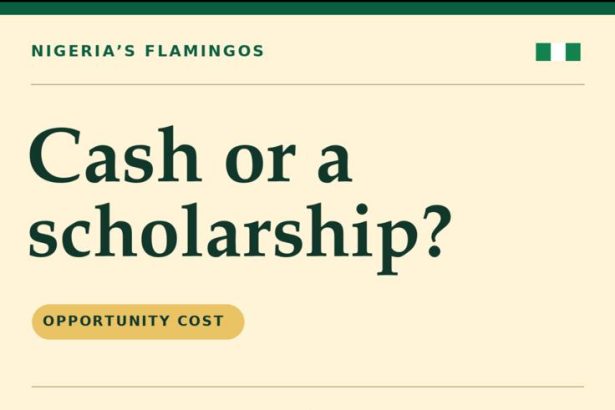
A sports journalist asked me what I would tell the Flamingos if they were offered scholarships. I pictured one of the girls sitting across the table with her parents. On one side is a cash offer. On the other is a letter promising to pay for her education. She wants to know which one I would take.
I’d start with two questions.
When would the money arrive?
And if she chose the scholarship, who would pay the school when her fees came due?
𝐖𝐇𝐀𝐓 𝟏𝟗𝟖𝟑 𝐓𝐀𝐔𝐆𝐇𝐓 𝐌𝐄
On 𝟖 𝐉𝐚𝐧𝐮𝐚𝐫𝐲 𝟏𝟗𝟖𝟑, we beat Guinea 𝟐–𝟎 to qualify for the 𝐅𝐈𝐅𝐀 𝐖𝐨𝐫𝐥𝐝 𝐘𝐨𝐮𝐭𝐡 𝐂𝐡𝐚𝐦𝐩𝐢𝐨𝐧𝐬𝐡𝐢𝐩 in Mexico. That victory made our 𝐅𝐥𝐲𝐢𝐧𝐠 𝐄𝐚𝐠𝐥𝐞𝐬 the first Nigerian team to qualify for a FIFA tournament.
Within days, President 𝐒𝐡𝐞𝐡𝐮 𝐒𝐡𝐚𝐠𝐚𝐫𝐢, through Sports Minister 𝐁𝐮𝐛𝐚 𝐀𝐡𝐦𝐞𝐝, announced that he had awarded each of us a scholarship to further our education.
The award recognised what we had achieved for Nigeria and spoke directly to where we were in life. Most of us were still students.
We were also promised the national honour of 𝐌𝐞𝐦𝐛𝐞𝐫 𝐨𝐟 𝐭𝐡𝐞 𝐎𝐫𝐝𝐞𝐫 𝐨𝐟 𝐭𝐡𝐞 𝐍𝐢𝐠𝐞𝐫 (𝐌𝐎𝐍).
More than four decades later, we are still asking the government to make good on those commitments. I’ll tell our full story separately.
What I would ask the Flamingos and their parents to take from ours is simple. Before you plan your education around a scholarship award, find out who will pay the school and when the money will arrive. A student needs those answers before her first fees are due.
There was another lesson from my playing days. At times, some of us earned enough to buy a plot of land or start building a house.
I wish someone had sat us down then and shown us how to set money aside, what it meant to own shares in a company, and how to weigh an investment in real estate against options like bonds or mutual funds. I would have liked to know how much I could afford to invest and how much I needed to keep within reach when football income slowed down.
That’s where we can confuse a transaction with a relationship. The transaction is the day a player receives her reward.
The relationship is having someone she and her family can turn to when they’re working out what to do with it. Give them access to qualified, independent advice before the money arrives, and make sure they have someone they can go back to when school fees come due or their plans change.
𝐖𝐇𝐀𝐓 𝐈𝐒 𝐄𝐀𝐂𝐇 𝐎𝐅𝐅𝐄𝐑 𝐖𝐎𝐑𝐓𝐇 𝐓𝐎𝐃𝐀𝐘?
𝐀𝐬𝐰𝐚𝐭𝐡 𝐃𝐚𝐦𝐨𝐝𝐚𝐫𝐚𝐧, a finance professor at New York University’s Stern School of Business, explains this in his teaching note on the time value of money.
To compare a lump sum today with payments spread over several years, you can calculate what those future payments are worth today.
OpenStax’s Principles of Finance shows how the timing of the payments changes the result.
Suppose the choice is ₦𝟏𝟎 𝐦𝐢𝐥𝐥𝐢𝐨𝐧 today or a scholarship that pays ₦𝟑 𝐦𝐢𝐥𝐥𝐢𝐨𝐧 a year for four years. Using 𝟖% a year for illustration, here’s how the figures work out.
- 𝐂𝐚𝐬𝐡 𝐭𝐨𝐝𝐚𝐲 — ₦𝟏𝟎 𝐦𝐢𝐥𝐥𝐢𝐨𝐧 is available immediately. If the full amount stayed invested for four years and earned 𝟖% each year, it would grow to about ₦𝟏𝟑.𝟔𝟎 𝐦𝐢𝐥𝐥𝐢𝐨𝐧 before taxes and fees.
- 𝐒𝐜𝐡𝐨𝐥𝐚𝐫𝐬𝐡𝐢𝐩 𝐩𝐚𝐢𝐝 𝐚𝐭 𝐲𝐞𝐚𝐫-𝐞𝐧𝐝 — Four payments add up to ₦𝟏𝟐 𝐦𝐢𝐥𝐥𝐢𝐨𝐧. At the same 𝟖% rate, their combined value in today’s money is about ₦𝟗.𝟗𝟒 𝐦𝐢𝐥𝐥𝐢𝐨𝐧.
- 𝐒𝐜𝐡𝐨𝐥𝐚𝐫𝐬𝐡𝐢𝐩 𝐩𝐚𝐢𝐝 𝐚𝐭 𝐭𝐡𝐞 𝐬𝐭𝐚𝐫𝐭 𝐨𝐟 𝐞𝐚𝐜𝐡 𝐲𝐞𝐚𝐫 — With the first payment made immediately, those same four payments are worth about ₦𝟏𝟎.𝟕𝟑 𝐦𝐢𝐥𝐥𝐢𝐨𝐧 today.
The scholarship totals ₦𝟏𝟐 𝐦𝐢𝐥𝐥𝐢𝐨𝐧 either way. Change the payment dates and, under these assumptions, it goes from slightly below the cash offer to above it. The amounts are hypothetical, and the 𝟖% rate is an assumption for the calculation.
𝐁𝐄𝐅𝐎𝐑𝐄 𝐘𝐎𝐔 𝐒𝐈𝐆𝐍
Ask for both offers in writing. For cash, ask how much the player will actually receive and on what date. For a scholarship, ask who pays the school, whether the money arrives before fees are due, and whether it covers tuition increases, housing and books. Check what happens if she changes schools, defers admission or takes time away from football.
If the family chooses cash, set aside what she’ll need for school and other near-term expenses before investing the rest.
An investment adviser can explain the risks, fees and how easily she can access her money.
In Nigeria, families can check the adviser’s registration with the 𝐒𝐞𝐜𝐮𝐫𝐢𝐭𝐢𝐞𝐬 𝐚𝐧𝐝 𝐄𝐱𝐜𝐡𝐚𝐧𝐠𝐞 𝐂𝐨𝐦𝐦𝐢𝐬𝐬𝐢𝐨𝐧.
𝐖𝐇𝐀𝐓 𝐈 𝐖𝐎𝐔𝐋𝐃 𝐓𝐄𝐋𝐋 𝐓𝐇𝐄 𝐆𝐈𝐑𝐋𝐒 𝐀𝐍𝐃 𝐓𝐇𝐄𝐈𝐑 𝐏𝐀𝐑𝐄𝐍𝐓𝐒
Using the figures in this example, I would lean towards cash at ₦𝟏𝟏 𝐦𝐢𝐥𝐥𝐢𝐨𝐧 𝐨𝐫 𝐦𝐨𝐫𝐞, paid upfront, if the family could set aside enough to cover her education. At ₦𝟏𝟎 𝐦𝐢𝐥𝐥𝐢𝐨𝐧, I would favour the scholarship if it reliably paid ₦𝟑 𝐦𝐢𝐥𝐥𝐢𝐨𝐧 at the start of each year for four years. If it also covered housing, books and tuition increases, the scholarship could be the better choice even at ₦𝟏𝟏 𝐦𝐢𝐥𝐥𝐢𝐨𝐧 in cash.
That is where 𝐨𝐩𝐩𝐨𝐫𝐭𝐮𝐧𝐢𝐭𝐲 𝐜𝐨𝐬𝐭 comes in. It’s the value of what you give up when you make a choice.
Take the cash, and you give up whatever the scholarship would have covered, including any protection against rising tuition.
Take the scholarship, and you give up the flexibility to use some of the money now and invest what you can afford to leave untouched.
Ask which of those benefits would be harder for your family to replace.
And to the player at that table, I’d say this. Tell your parents what you want to study. Then work out together what it will cost to get you from admission to graduation. Put that figure beside both offers before you decide.
Flamingos, I want to share my personal motto with you.
“𝐄𝐝𝐮𝐜𝐚𝐭𝐢𝐨𝐧 𝐢𝐬 𝐧𝐨𝐭 𝐚 𝐠𝐮𝐚𝐫𝐚𝐧𝐭𝐞𝐞 𝐟𝐨𝐫 𝐬𝐮𝐜𝐜𝐞𝐬𝐬, 𝐛𝐮𝐭 𝐰𝐢𝐭𝐡𝐨𝐮𝐭 𝐢𝐭, 𝐲𝐨𝐮 𝐝𝐨𝐧’𝐭 𝐬𝐭𝐚𝐧𝐝 𝐚 𝐜𝐡𝐚𝐧𝐜𝐞.”
— 𝐏𝐚𝐮𝐥 𝐋𝐮𝐜𝐤𝐲 𝐎𝐤𝐨𝐤𝐮
Football has already opened doors for you. Play for as long as you can and make the most of every season.
One day, you’ll play your last match. The education you make room for now can sustain what football helped you build and give you choices long after that final whistle.
I’ll leave the Flamingos and their parents with a Yoruba proverb.
“Ogbon logbon la fi n kọgbọn, òwún náà ló jẹ ká pé agbani wèrè”
𝐈𝐧𝐭𝐞𝐫𝐩𝐫𝐞𝐭𝐚𝐭𝐢𝐨𝐧 — We gain wisdom from other people’s thinking, even from someone we might dismiss as foolish.
What I take from it is that we sharpen our own judgment by listening to others.
I’ve shared what my experience taught me and how I would weigh the two offers.
In the end, each player and her family know what she hopes to study, what they can afford and which offer they can count on.
The final decision belongs to each player and her family.
𝐏𝐚𝐮𝐥 𝐋𝐮𝐜𝐤𝐲 𝐎𝐤𝐨𝐤𝐮
FIFA Legend | Former Nigeria Flying Eagles Vice-Captain | Former Super Eagles International | AFCON Silver Medalist | Football Historian | Football Analyst | Investigative Football Writer | Journalist-at-Large | Founder & CEO, Greater Tomorrow Children’s Fund (GTCF)
Please feel free to share this article… We are all in this together.
𝐒𝐎𝐔𝐑𝐂𝐄𝐒
- 𝐀𝐬𝐰𝐚𝐭𝐡 𝐃𝐚𝐦𝐨𝐝𝐚𝐫𝐚𝐧, NYU Stern School of Business — A Primer on the Time Value of Money.
- 𝐎𝐩𝐞𝐧𝐒𝐭𝐚𝐱, Principles of Finance, second edition — Time Value of Money Basics and Annuities.
- 𝐒𝐞𝐜𝐮𝐫𝐢𝐭𝐢𝐞𝐬 𝐚𝐧𝐝 𝐄𝐱𝐜𝐡𝐚𝐧𝐠𝐞 𝐂𝐨𝐦𝐦𝐢𝐬𝐬𝐢𝐨𝐧, Nigeria — Find a Registered Operator.
- 𝐏𝐚𝐮𝐥 𝐋𝐮𝐜𝐤𝐲 𝐎𝐤𝐨𝐤𝐮 — Firsthand account of the scholarship promise made to the 𝟏𝟗𝟖𝟑 Flying Eagles under President Shehu Shagari.